

Your Body Isn’t Betraying You. It’s Asking for Something Different.
I hear it almost every week. A new client sits across from me and says some version of the same thing:
“I used to be able to just cut back and the weight would come off. Now nothing works.”
Or: “I feel like I’m losing muscle and I don’t know how to get it back.”
Or the one that gets me every time: “I think my body just isn’t capable of what it used to be.”
That last one breaks my heart a little, because it’s not true. Not even close.
Your body after 40 is absolutely capable of building muscle, gaining strength, and transforming how you look and feel. What’s changed isn’t your body’s potential. It’s what your body needs from you to get there. The rules shifted. Nobody told you. And now you’re running the old playbook in a new game.
So let’s rewrite the playbook.
Strength Training: The Non-Negotiable
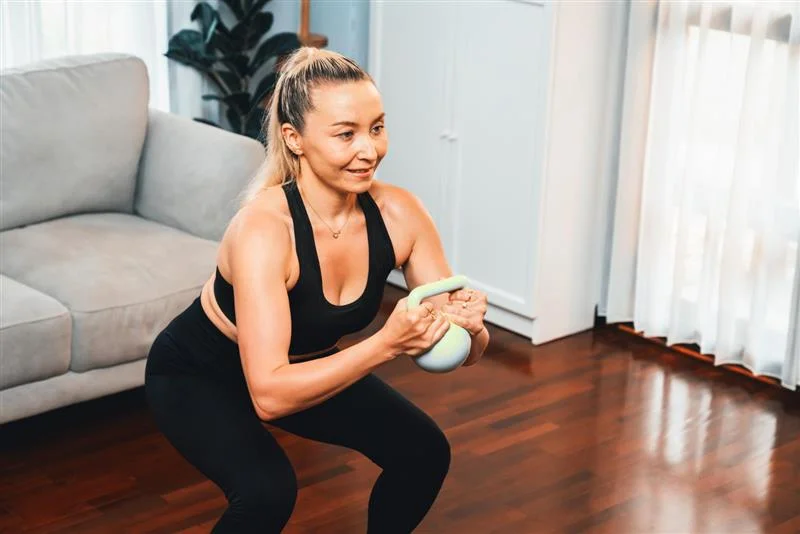
If you take one thing from this post, let it be this: strength training is no longer optional after 40. It’s essential.
This is the exact structure of my strength training program for women: progressive loading, two to three sessions a week, programmed around your joints and your recovery. Locally that means the studio in Newport Beach or Irvine, or your home anywhere in Orange County.
Starting around age 30, women begin losing muscle mass through a process called sarcopenia. The National Institute on Aging confirms that this decline accelerates with each decade, directly affecting your metabolism, your balance, your bone density, and how your body looks and feels.
But here’s what sarcopenia doesn’t tell you: muscle loss is not inevitable. It’s what happens when we stop giving our muscles a reason to stay.
Resistance training is that reason. When you pick up a dumbbell, your body receives a signal: rebuild here, strengthen this, hold onto what we’ve got. Three focused sessions per week with squats, presses, rows, and lunges, and your body starts responding in ways that will surprise you.
You don’t need to train like an athlete. You need to train like a woman who respects what her body is capable of.
Protein: The Building Material Your Body Is Starving For
Training creates the stimulus. Protein provides the material your body uses to answer it.
After 40, your body becomes less efficient at using the protein you eat, a process researchers call anabolic resistance. That means the amount of protein that worked fine in your 30s may not be enough now. The Harvard T.H. Chan School of Public Health emphasizes that adequate protein intake is critical for maintaining lean muscle mass, metabolic health, and overall vitality as we age.
In practical terms: eggs at breakfast, lean protein at lunch, and a quality source at dinner. Every single day. If you want to understand the specific numbers and what that looks like on a real plate, I go deeper into how much protein women over 40 actually need.
This is where I watch women’s entire experience change. Not from a new workout. From finally eating enough to support the work they’re already doing.
Recovery: The Part You’re Probably Skipping
I spent years believing that more was better. More workouts, more intensity, more effort. And then my body reminded me, loudly, that I was wrong.
Muscle doesn’t grow during the workout. It grows after. In the hours of sleep. In the rest day you feel guilty about taking. In the walk you take instead of the extra session.
The Cleveland Clinic is clear: rest, quality sleep, and recovery time are essential for muscle repair and hormone regulation. For women navigating the hormonal shifts of perimenopause and menopause, recovery isn’t a luxury. It’s a requirement.
So sleep. Stretch. Walk. Breathe. And stop feeling guilty about the days you don’t train. Those days are building you just as much as the ones that leave you sore.
Hormones: What Nobody Explained to You
If your body started feeling unfamiliar in your late 30s or 40s, there’s a physiological reason.
Declining estrogen during perimenopause and menopause directly impacts how your body stores fat, builds muscle, and regulates energy. The North American Menopause Society highlights that strength training and proper nutrition are among the most effective ways to offset these changes.
You’re not imagining it. Your body really is different. But different doesn’t mean broken. It means you need a strategy: resistance training, balanced nutrition, stress management, and adequate sleep, all working together.
Consistency Wins. Every Single Time.
The women I’ve watched transform their bodies after 40 were not the ones with perfect plans. They were the ones who kept showing up.
Three sessions a week, even when they didn’t feel like it. Protein at every meal, even when it wasn’t convenient. Sleep prioritized, even when the world said otherwise.
Results after 40 are slower than they were at 25. Accept that. Then keep going anyway. Because what you build now (the strength, the confidence, the vitality) is more durable and more meaningful than anything you had before.
And as your training becomes more consistent, you may also find that supplements like creatine can offer an additional layer of support for strength and recovery.
This is exactly the kind of approach I take with my strength training clients, building strength in a way that fits your life, not fights it.
This Is Your Strongest Chapter
You’re not trying to go back to who you were. You’re building someone stronger, wiser, and more connected to her body than that woman ever was.
Ready to build muscle after 40?
My strength training for women program is built for exactly this stage: progressive loading, protein, recovery. In studio in Newport Beach or Irvine, in your home across Orange County, or online. It starts with a free 15-minute consultation call. If we’re a good fit, the next step is a full assessment.
Frequently Asked Questions About Building Muscle After 40
Can you still build muscle after 40 and 50?
Yes, and I’m living proof. With consistent strength training, intentional nutrition, and real recovery, your body can rebuild muscle, gain strength, and feel more capable than it has in years.
Can you still build muscle after 40 and 50?
Most women feel stronger within the first few weeks. Visible changes in muscle tone and body composition typically appear within 6 to 12 weeks of consistent training and nutrition.
An Affirmation for You:
I am strong. I am capable. I am building a body that supports the life I desire.
Love Yourself,
Jennifer Winestorfer 💖